Tag: spiritual and ritual abuse

  • The Persistence of Deadly Belief: The Killing of Hellen Kamutumbe

    The Persistence of Deadly Belief: The Killing of Hellen Kamutumbe

    On March 20, 2026, Eneless Hellen Kamutumbe set out for a local market in the Kisasa area of Kalumbila District, Zambia.  The 46 year old wife and mother was there on a business trip from which she would never return.

    Moments after a slight physical encounter with 25-year-old Prince Ntambo, he shouted that Hellen had caused his genitalia to disappear. These loud allegations drawing  prompt attention pitted over 250 people against Hellen. This mob stripped her naked, pelted her with stones and struck her not only with sticks and wooden planks.

    In the midst of the chaos, one courageous bystander intervened, pulling Hellen from the crowd and bringing her into a nearby house in an attempt to save her. But the mob followed in hot pursuit.

    They dragged Hellen back outside, beat her again, and killed her, discarding her body on a nearby road. 

    Police response efforts were also met with violence. While it remains unclear exactly when officers arrived, it is known that the mob also threw stones at them, injuring three officers, and damaging the windscreen on the police vehicle hindering necessary intervention. Emergency  Assistance was contacted once the police located Hellen. However, it was too late. Hellen was pronounced dead when she arrived at the hospital.

    The earliest reports suggested that 17 people were arrested which has changed drastically due to serious, needed investigation.  As of March 24, 2026, 259 people have been arrested, including 93 women and the ongoing investigation may lead to even more arrests. Those charged are not eligible for bond and will remain in custody at least until their cases are heard. 

    This raises difficult and necessary questions.

    Were some of the women in the mob closely connected to Ntambo—perhaps even his girlfriends—who believed, in that moment, that Hellen had somehow “taken” his manhood simply by passing by or brushing up against him?

    Women-on-women violence in cases like this is particularly troubling. Women are often seen as protectors of one another, yet here, some stood at the forefront—participating in the stripping, beating, and killing of another woman.

    In the aftermath, the Senior Traditional Leader of the Lunda-speaking community, Chief Musele Musokantanda, ordered the Kisasa Market closed for two months which serves two purposes:

    1. A form of communal accountability for the failure of bystanders to protect Hellen.
    2. The establishment of a formal committee to identify who trades at the market and who owns trading spaces which would aid in the overall investigation.

    The closure of the market highlights a stark reality: when a community allows violence to unfold unchecked, the consequences ripple outward, affecting livelihoods, trust, and social stability.

    At the center of all of this is a truth that cannot be ignored:

    Hellen Kamutumbe did not commit a crime.

    There is no scientific reality in which one person can cause another’s body to physically alter or “disappear” through supernatural means.

    Thus, why was Hellen accused?

    The belief in “disappearing manhood” is a long-standing superstition found in parts of Southern and Central Africa. These accusations often emerge during periods of economic hardship, social anxiety, rapid urbanization, and cultural change.

    Zambia itself has faced significant challenges in recent years. A severe drought in 2024 led to major power outages and reduced agricultural output. Inflation remains high, and poverty affects an estimated 60% of households. At the same time, the population has grown dramatically—by roughly 43% between 1963 and 2022—contributing to overcrowding, informal settlements, and widening inequality.

    In such conditions, uncertainty breeds fear. 

    When panic takes hold, scientific reality can be hidden and overtaken by superstitious belief.

    Zambia is widely considered a Christian nation, and faith institutions play a powerful role in shaping belief systems. This places a responsibility on churches and religious leaders to actively address harmful myths and misconceptions, and to promote education that reduces the stigma surrounding witchcraft accusations.

    At the same time, there is a clear need for civil society organizations to step in—offering education, advocacy, and community-based interventions that challenge dangerous narratives before they turn violent.

    In response to this crime, the President has called on families to instill stronger values in their children. But this raises a critical question:

    Do those values include critical thinking?

    Because without the ability to question, investigate, and evaluate claims, belief can easily override truth. Education must equip people with the tools to challenge misinformation and resist fear-driven conclusions.

    Who teaches children how to think critically?

    Who prepares them to distinguish fact from superstition?

    Without those skills, even the most baseless accusation can become deadly.

    How does the belief that touching someone causing their genitalia to disappear tie into historical witch-hunts?

    In 1486, Heinrich Kramer published the Malleus Maleficarum, a manual for identifying and prosecuting witches that would shape legal systems across the Western world for centuries. In it, Kramer wrote that witches could make a man’s genitals vanish through touch. He called it a glamour — an illusion cast upon the senses. The body was untouched. The harm was not real. And yet he codified it as a prosecutable fact. That manual gave legal weight to the idea that a woman’s body was a weapon, that her touch could destroy a man, and that the man’s claim alone was enough to condemn her. Even when the harm was, by Kramer’s own definition, imaginary.

    Courts across Europe used it. And then colonial New England did too.

    In 1648, Margaret Jones of Charlestown, Massachusetts became the first person executed for witchcraft in the Massachusetts Bay Colony. The accusation against her centered on her touch. Those she laid hands on, the court was told, suffered for it. She was hanged.

    In 1662, eight-year-old Elizabeth Kelly of Hartford, Connecticut, died days after Goodwife Ayres visited her home and shared a bowl of broth with her. Her parents testified that Elizabeth cried out: “Goodwife Ayres is upon me. She chokes me. She kneels on my belly. She will break my bowels. She pinches me.” It was Ayres’s specter, not her physical presence, that the courts accepted as the weapon. The harm was invisible. The accusation was enough. That case ignited the Hartford panic and sent people to the gallows.

    By 1692, the doctrine was so deeply embedded that Salem courts accepted touch as direct evidence of guilt. The so-called touch test held that an afflicted person would be relieved of their torment when touched by the witch tormenting them. Rebecca Nurse, Mary Easty, and scores of others across Essex County faced accusers whose bodies were treated as instruments of proof. To touch someone and have them react was, in a Puritan courtroom, as good as a confession.

    These were not superstitions held by ignorant people on the margins of society. They were legal mechanisms, applied by educated magistrates, in functioning courts, with witnesses and records and sentences carried out by the state.

    That is what the Malleus Maleficarum built. A framework in which a woman can be killed for what a man claims her touch did to his body, and the legal and social machinery around her will not protect her. It will prosecute her.

    That framework did not disappear. It travels. It adapts. And on March 20, 2026, it arrived at a market in Zambia.

    Mob justice, also referred to as “instant justice,” harms communities by replacing truth with assumption, law with chaos, justice with violence.

    Technology now plays a significant role in these moments. In large crowds, someone is always recording which will later serve as evidence. As a result,  authorities can  identify and prosecute those involved.

    If this reality is incorporated into public education efforts, it could act as a deterrent—especially among younger generations who are constantly aware of digital visibility.

    Hellen Kamutumbe’s death forces us to confront an enduring question:

    How do societies address deeply rooted beliefs that can lead to violence?

    Horrific tragedies will continue if these beliefs are not challenged  with education, open dialogue, and critical thinking.

    And innocent lives will continue to be lost.

    Simple truths are powerful:

    Do not follow the crowd.

    Mind your own business.

    Because when fear drives action, lives are destroyed—not only for the victim, but for entire communities left to live with the consequences.

    End Witch Hunts condemns the killing of Eneless Hellen Kamutumbe and calls for full accountability for those responsible. Witchcraft accusations are not ancient history. They are a present and deadly reality.

    Wherever you are, you can help. Share this story. Say her name. Support organizations working to end witchcraft accusation violence worldwide.​​​​​​​​​​​​​​​​

    Sources: 

    NBC Digital News status update announcing arrests of 259 people

    Genital Disappearance: Senior Chief Museli orders closure of Kisasa Market for two months | Zambia Monitor

    17 suspects apprehended in Kalumbila District mob murder case | Mwebantu
    https://www.youtube.com/watch?v=JmdPbaPAT48
  • The Force of Our Advocates in 2025: Ending Witch Hunts with Borderless Education and Measurable Impact

    Many distinct teaching moments spanning continents, generations, and contexts capture what 2025 has been about for End Witch Hunts.

    This year, the public reached out to us for more information and educational support.  A middle schooler discovered us through our The Thing About Witch Hunts podcast episode “Salem Aftermath” with screenwriter Tom Phillip and reached out for help with a National History Day project on the Salem witch trials. We interviewed for their project documentary and the questions we were asked about how the Salem witch trials became so devastating were so valuable we featured the same questions for an episode on The Thing About Salem podcast. 

    Another key inquiry came from a police director in a country where we collaborate with grassroots advocates. He reached out and requested a training seminar for dozens of area police directors on witchcraft accusation intervention and survivor support for their local communities. This year, we also engaged with high school and college students and faculty. Executive Director Sarah Jack connected with a high school English language class in Finland through DKG International for a virtual classroom visit about witch hunting, and End Witch Hunts consulted with a community college librarian who developed a Salem Witch Trials history exhibit for their fall programming.

    These connections across continents, generations, and contexts are the heart of our work. We’re connecting past and present witchcraft accusation stories, bridging communities across oceans, and piercing the complexity of witch hunting to make the subject accessible to anyone who wants to understand it.

    As a volunteer-driven Colorado nonprofit organization, everything we accomplish depends on the dedication of people who believe this work matters. Our board members, contributors, and partners donate their money, time, and expertise to ensure witch trial victims are remembered and modern advocacy efforts are growing.

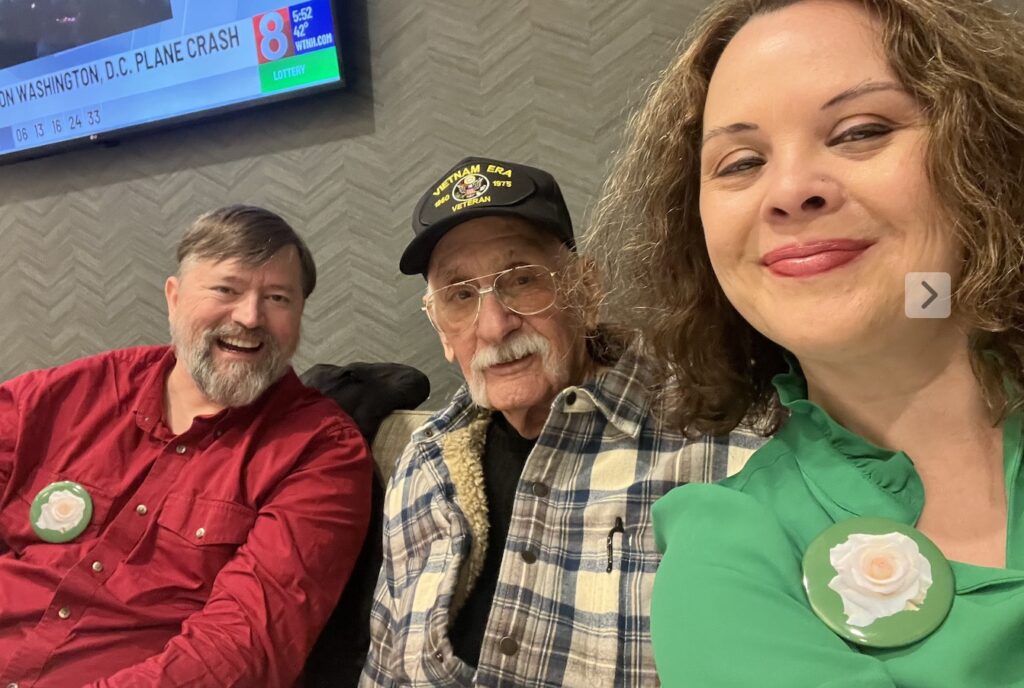
    A group photo of three individuals smiling, one wearing a 'Vietnam Era Veteran' cap and another with a flower brooch on their shirt.
    End Witch Hunts board member Josh Hutchinson (left) sitting with director Darah Jack (right) and volunteer Tony Griego (middle) on February 1, 2025

    Reaching New Audiences Through Video Podcasts

    Our one-of-a-kind video podcasts hit more milestones again this year. To date, we have reached over 100 countries with over 270 episodes featuring more than 150 specialized experts from around the world. This year, we launched a second weekly video podcast, The Thing About Salem, on which we dig deep into the infamous and misunderstood 1692-1693 witchcraft trials with focused storytelling and expert insights. These volunteer-led educational podcasts have become the trusted media resource for students, researchers, and everyone learning about or researching witch trial history and alleged witch persecution.

    This October and November brought our best statistics in three years of podcasting, and our YouTube channel crossed 900 subscribers. The Thing About Witch Hunts was recognized as a top 15 percent video podcast on Spotify and The Thing About Salem podcast was named a “2025 Instant Hit Show,” more popular than 71 percent of other new shows. We produce the only weekly video podcasts exclusively covering witch hunting and provide an essential global platform for global representation and expert discussion. Every episode represents hours of volunteer research, interviewing, editing, and production work dedicated to education. With over 270 episodes published, we have surpassed the 200-episode threshold that fewer than 3% of podcasts achieve. Our consistency in delivering new episodes weekly reflects our unwavering commitment to advocacy against witch hunting.

    Partnerships and Community Connections for The Connecticut Witch Trial Exoneration Project

    2025 brought the Connecticut Witch Trial Exoneration Project into conversation with a larger community. On The Thing About Witch Hunts, we explored the Springfield Museums’ exhibit on convicted witch Hugh Parsons, whose story connects to Alice Young’s daughter, Alice Young Beamon, we examined Connecticut’s witch trial history and The Witch of Blackbird Pond with the Wethersfield Historical Society, and we discussed the Glebe House Museum’s community production Ground Zero: Witchcraft in Connecticut, which tells the stories of accused witches Moll Cramer, Katherine Harrison, and Rebecca Greensmith. These collaborations helped us reach people who might never have sought out a podcast or known about Connecticut’s witchcraft accusations. In total, we added five Connecticut humanities-themed podcast episodes this year, including a new author talk with End Witch Hunts executive board member Beth Caruso.

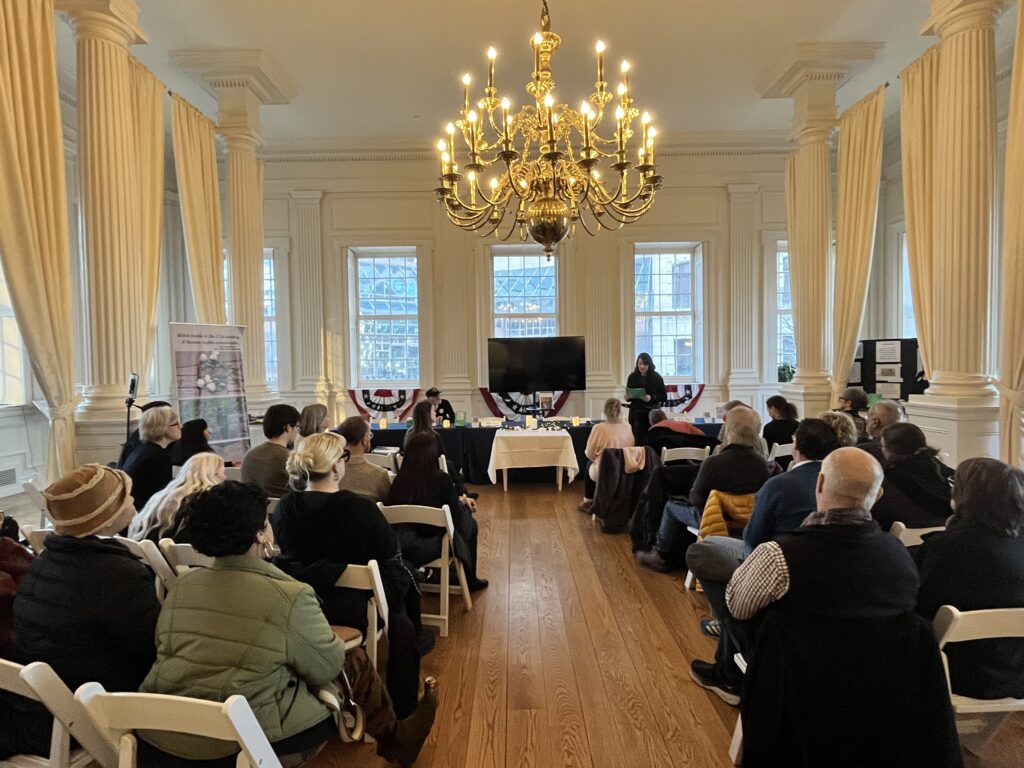
    Our Community Day of Remembrance for Connecticut witch trial victims brought together dozens of local and national volunteers in partnership with Hartford’s Old State House, Hartford’s Ancient Burying Ground, and Windsor’s community television network, WIN-TV. The event honored all those accused of witchcraft in colonial Connecticut and celebrated the passage of state legislation championed by House Representative Jane Garibay and Senator Saud Anwar acknowledging this historic injustice. The program included a history presentation by student William Schloat, a performance of The Hanging of Rebecca Greensmith: A Symphony in Spoken Word by Debra Walsh and Virginia Wolf, and an expert panel featuring author Beth Caruso, advocates Tony Griego and Mary Bingham, author Richard Ross III, Representative Garibay, and Senator Anwar. Josh Hutchinson and Sarah Jack moderated, and Dr. Kathy Hermes provided a recorded introduction about drafting a purposeful witchcraft accusation resolution. A flower remembrance ceremony was led by Alice Young descendants. You can watch the event on WIN-TV’s YouTube channel and hear our reflections on its success on The Thing About Witch Hunts podcast.

    Audience attends the event Remembering the Innocent Victims of the Connecticut Witch Trials on February 1, 2025
    Guests gathered for Remembering the Innocent Victims of the Connecticut Witch Trials on February 1, 2025

    Building Bridges Across the Globe

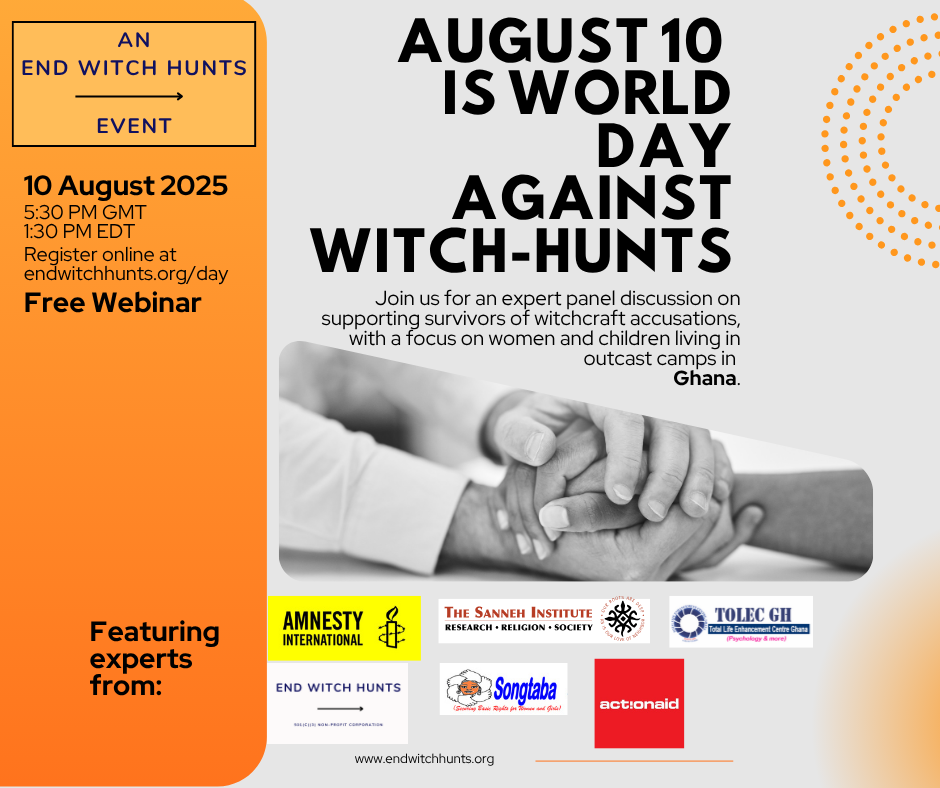
    World Day Against Witch Hunts, established by Missio (the Catholic mission organization) in 2020, is observed every August 10th to draw attention to the global crisis of Harmful Practices Related to Accusations of Witchcraft and Ritual Attacks. We commemorated the day with a live event and podcast featuring Amnesty International Ghana and the Coalitions Against Witchcraft Accusations (CAWA), bringing global attention to ongoing witchcraft accusations and violence in Northern Ghana and around the world. This marked the first public collaborative conversation between these organizations dedicated to witch hunting advocacy.

    Promotional graphic for the World Day Against Witch Hunts event on August 10, 2025, featuring details about a free webinar on supporting survivors of witchcraft accusations in Ghana.
    Promotional graphic for a panel featuring Amnesty International Ghana and the Coalition Against Witchcraft Accusations held on World Day Against Witch Hunts, August 10, 2025

    Honoring the Victims: Research and Remembrance

    Board member and witch trial descendant Mary Bingham continues her meticulous volunteer research into the lives of accused witches, and she’s created a comprehensive youtube playlist of Spiritual and Ritual Abuse in the United States with victim stories. All of this content is freely available on the youtube channel SarahWildes1692, reflecting our commitment to accessible education. On SarahWildes1692, you can also view the Tituba memorial brick, which was recently installed on behalf of our organization at the House of The Seven Gables. 

    Board member and author Beth Caruso expanded her presentations across New England and added extra fall witch walks to her programming in Windsor, Connecticut to accommodate demand and interest. Her podcast episode about Alice Young became one of our highest-performing episodes.  

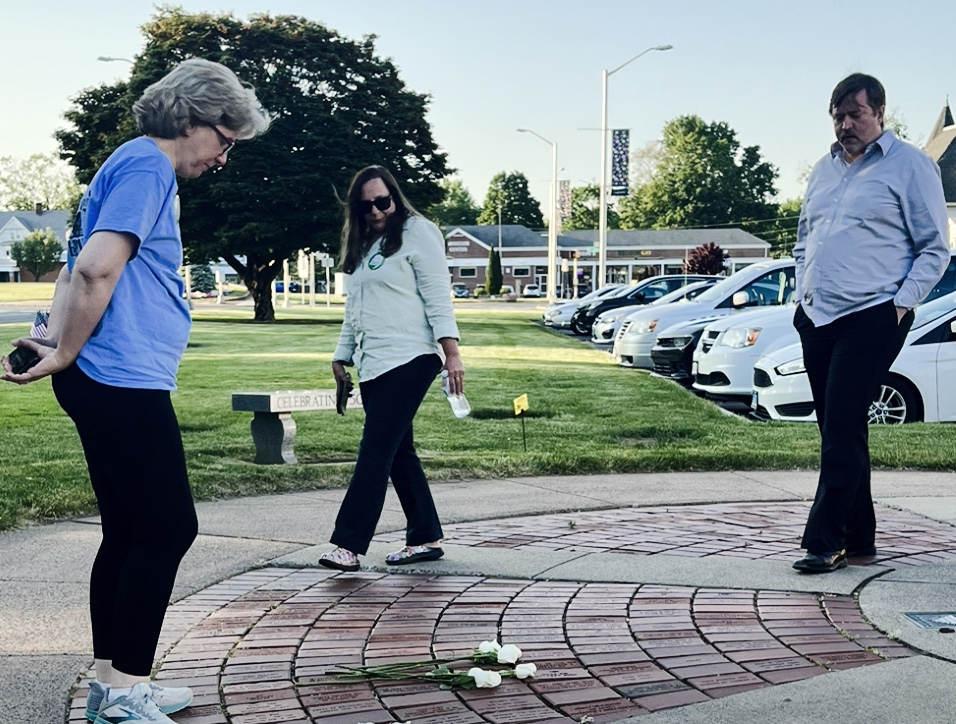
    End Witch Hunts board members visit the Alice Young and Lydia Gilbert memorial bricks in Windsor, CT
Pictured (from left to right): Mary Louise-Bingham, Beth Caruso, and Josh Hutchinson
    End Witch Hunts board members visit the Alice Young and Lydia Gilbert memorial bricks in Windsor, CT
    Pictured (from left to right): Mary Louise-Bingham, Beth Caruso, and Josh Hutchinson

    Behind the Scenes: Technical Expertise and Innovation

    Board member, treasurer, and witch trial descendant Josh Hutchinson’s volunteer work as podcast producer has been essential to our educational mission. He leads every aspect of production for both The Thing About Witch Hunts and The Thing About Salem, from researching guests to final editing. Josh also maintains and updates our websites, ensuring our resources remain accessible and user-friendly. This year, he continued to develop the Connecticut Witch Trial Trail, available at connecticutwitchtrials.org, offering an interactive way to explore Connecticut’s witch trial sites and stories.

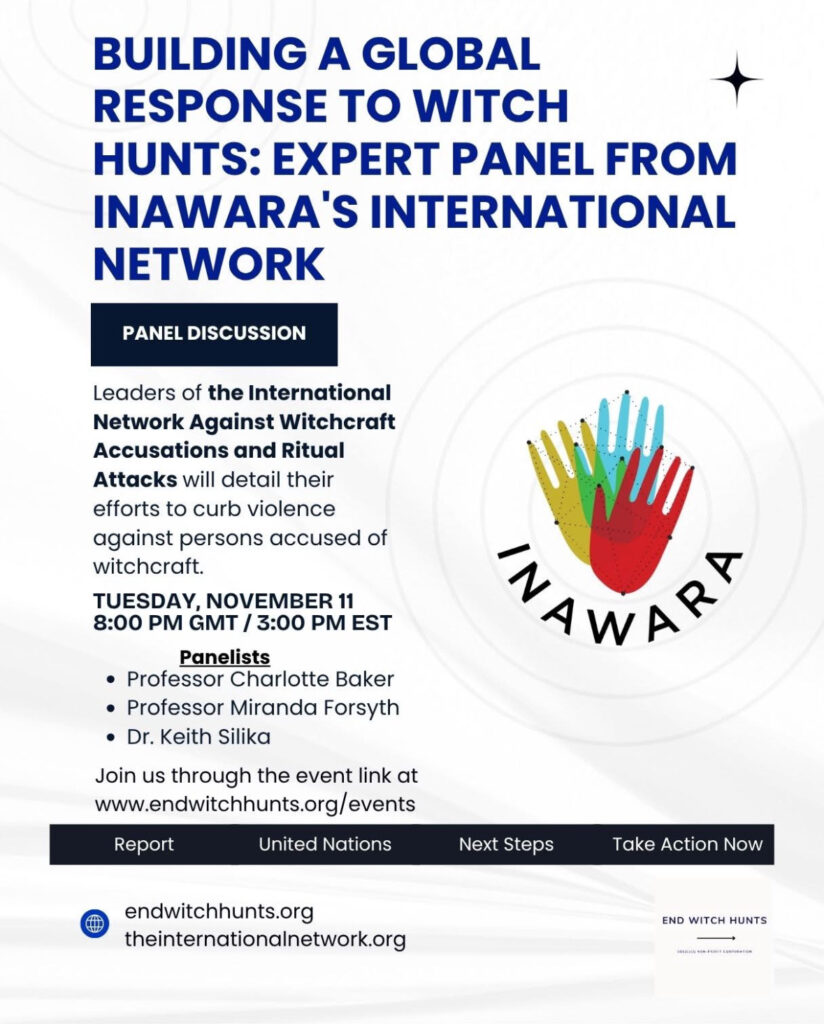
    Promotional graphic for an expert panel discussion titled 'Building a Global Response to Witch Hunts' featuring leaders from the International Network Against Witchcraft Accusations and Ritual Attacks, scheduled for November 11. Includes event details, panelists, and organizations involved.
    Poster for the Building a Global Response to Witch Hunts, which featured the International Network Against Witchcraft Accusations and Ritual Attacks (INAWARA)

    Executive Director Sarah Jack: Leading Through Connection

    Witch trial descendant Sarah Jack spent 2025 pursuing new connections and collaborations wherever doors opened. From virtual classroom visits with Finnish students through DKG International to consulting with a community college library developing a Salem Witch Trials history exhibit, she continued to serve as a spokeswoman, building global amplification of advocacy, whether speaking to individual students, community groups, or international organizations. She co-hosts both The Thing About Witch Hunts and The Thing About Salem podcasts and will speak as part of the International Network Against Witchcraft Accusations and Ritual Attacks speaker series in January 2026. Her work exemplifies End Witch Hunts’ commitment to connecting with any individual or group ready to engage with this mission.

    Growing Our Content and Community

    Thank you for sharing our blogs with your community! Our social platforms and email newsletter subscribers have grown. We’ve expanded our End Witch Hunts Bookshop selections, making it easier for supporters to shop quality books on witch trials and related topics. When you purchase through our affiliate link, www.bookshop.org/shop/endwitchhunts you support our nonprofit work, even if you’re buying books not in our collection. Your generous support helps us continue our volunteer-driven projects.

    We’re passionate about closely reading books that are grounded in solid research and primary sources and actually show the evidence. For the podcasts, we’re constantly reading across different fields and disciplines, always looking for authors who’ve done the hard work of going back to original documents, conducting rigorous studies, or presenting firsthand accounts with art and creativity. There’s something invaluable about engaging with material that doesn’t just tell you what to think but shows you how we know what we know. We’d encourage you to seek out these kinds of books, too.

    Looking Ahead in Massachusetts

    Massachusetts legislation that would extend exoneration to witch trial victims beyond Salem is currently being reviewed by the General Court’s Joint Committee on the Judiciary. This bill will clear the eight innocent people who were convicted of witchcraft in Boston. A committee hearing was held in November, and we’re awaiting a decision on whether the bill will be sent on to the House for a vote. The Massachusetts Witch Hunt Justice Project has benefited from impressive community mobilization around this effort, with testimony in support of bill H1927 coming from historians, genealogists, descendants, and international advocates. 

    In other news from the commonwealth, Salem will celebrate its 400th anniversary in 2026, honoring its history as Massachusetts Bay Colony’s first town and the journey from thriving port city to tourist destination. We’re exploring ways to participate in the heritage events, bringing attention to the witch trial victims and their stories during this milestone year. 

    Members of the Massachusetts Witch-Hunt Justice Project stand with Rep. Steven Owens at the foot of a staircase in the State House.
    A photo opportunity following the November 25, 2025 hearing in the Joint Committee on the Judiciary.
    Pictured, from left to right: David Allen Lambert, Sarah Jack, Rep. Steven Owens, Marilynne Roach, Dan Gagnon, and Antonio Infante

    Gratitude and Philanthropic Support

    None of this would be possible without our dedicated volunteer board members, our podcast guests who generously share their expertise, the museums and organizations that partner with us, and our growing community of listeners, readers, and supporters. Every donation, every shared post, every hour volunteered amplifies the voices of the innocent. 

    One podcast listener recently described our work as covering “witch trials from past to present with depth and breadth in a remarkably short timeframe.” That’s exactly what we’re trying to do. Not just tell stories, but actively build connections, honor victims, and work toward a world where accusations of witchcraft no longer destroy lives.

    Our education and advocacy are growing because people like you support us through donations, volunteer time, content sharing, or simply listening and learning. Thank you for making 2025 possible. We’re entering 2026 ready to pursue every new connection and collaboration that comes our way.

    To learn more about our work, listen to our podcasts, support our nonprofit mission, or volunteer your expertise, visit our website, endwitchhunts.org, and follow us on social media.

  • This Giving Tuesday, Stand Against Witch Hunts

    End Witch Hunts charts a solitary path as the only American nonprofit created for witchcraft accusation awareness and witch trial history. This Giving Tuesday, we’re asking you to stand with us in this vital work.


    A Unique Mission for Giving Tuesday

    We are the ONLY U.S. organization dedicated to ending literal witch hunts, both past and present. While witch trials may seem like distant history to many Americans, the reality is that witchcraft accusations continue to destroy lives around the world today including in the U.S. Additionally, here at home, victims of historical witch trials remain legally guilty centuries after their deaths.

    Our mission bridges these two realities: we work to restore justice to historical victims while raising awareness about contemporary witch hunts that still claim lives globally. This Giving Tuesday is your opportunity to support the only American organization with unique programming that includes two weekly podcasts featuring specialized experts from around the world dedicated to this crisis.

    What We Accomplished in 2025

    This year demonstrated the growth, breadth, and impact of our work:

    We presented educational programs in New England and Colorado, bringing witch hunt awareness into communities that introduced the  history and ongoing global crises. We consulted on building a Salem witch hunt exhibit at a community college library, helping ensure accurate historical information reaches students and the public.

    Through our two weekly podcasts, The Thing About Witch Hunts and The Thing About Salem, we created platforms for historians, advocates, and experts from around the world to share their specialized research. These podcasts amplify the voices of victims and survivors, past and present, ensuring their stories are heard and remembered world wide.

    We brought awareness to critical dates: World Day Against Witch Hunts on August 10, International Women’s Day on March 8, and International Albinism Awareness Day on June 13. These observances connect historical persecution patterns to contemporary human rights issues.

    We connected efforts to vital resources and networks, building bridges between advocates, researchers, and organizations working to end witchcraft accusations worldwide.

    And perhaps most significant to the U.S., we testified before the Massachusetts legislature to exonerate eight Boston witch trial victims who remain legally guilty after 375+ years. These men and women deserve justice, and we’re dedicated to clearing their names.

    100% Volunteer Run: Your Giving Tuesday Donation Goes Further

    Here’s what makes End Witch Hunts different: we are 100% volunteer run. Every single dollar you donate goes directly to our mission: education, advocacy, memorialization, and justice. We are dedicated volunteers working to end witch hunts and restore dignity to the accused. When you choose End Witch Hunts for your Giving Tuesday donation, you can be confident your gift creates maximum impact.

    Why This Work Matters

    Witch hunt history is too often misunderstood, trivialized, or dismissed entirely. The true stories of the real people who suffered and the behaviors that enabled their persecution have been lost to myth and misconception. We’re changing that narrative by bringing accurate history to light and helping communities understand what actually happened and why it matters today.

    Witch hunts didn’t end in the 17th century. They continue today in communities around the world, driven by the same fears, scapegoating, and accusatory behaviors that fueled historical persecutions. By helping people truly understand the past through rigorous research and expert voices, we equip them to recognize and address these same dangerous patterns in the present.

    When we work to exonerate historical victims, we’re not just correcting the legal record. We’re restoring their stories, closing centuries old chapters of injustice, and affirming that truth and dignity matter, even across the span of centuries.

    When we educate communities about the realities of witch hunt history and contemporary accusations, we’re building awareness that can save lives and prevent persecution. 

    Make Your Giving Tuesday Gift Count

    This Giving Tuesday, help us continue this vital work. Your Giving Tuesday gift, whether $10, $50, or $100, makes a real difference in our ability to educate, advocate, memorialize, and seek justice.

    Looking for a meaningful way to participate in Giving Tuesday 2025? Be the one to join us in standing against witch hunts, past and present.

    Donate today: www.endwitchhunts.org/donate

    Together, we can create a world where no one is persecuted for witchcraft accusations and where historical victims finally receive the justice they deserved all along. Make your Giving Tuesday donation to End Witch Hunts and support the only organization doing this critical work.

  • Beyond the Headlines: Understanding Ritualistic Crime

    Beyond the Headlines: Understanding Ritualistic Crime

    In this article, you’ll learn:

    • Why jumping to supernatural explanations for violent crimes harms both victims and our understanding of human behavior
    • How historical fears about ritual murder have been used to persecute innocent religious communities
    • The difference between genuine spiritual motivation and performative violence designed to intimidate
    • How body part trafficking exploits others’ magical beliefs for profit
    • How to approach unusual crimes with critical thinking instead of reflexive fear
    • Your role in protecting vulnerable communities from moral panic and misplaced blame

    When a violent crime captures public attention with unusual or ritualistic elements, our collective response often follows a predictable pattern. Headlines scream about “satanic rituals” and “cult activity,” while social media amplifies fears about ancient practices and supernatural threats. But this ingrained practice of searching for extraordinary explanations does a disservice to both victims and our understanding of human behavior, while also distancing us from the uncomfortable reality that these acts stem from human choices and motivations we must grapple with.

    The Human Behind the Horror

    Every violent crime, no matter how bizarre or ritualistic it may appear, is committed by a human being making human choices. When we immediately leap to explanations involving cults, satanic practices, or supernatural influences, we risk overlooking the very real psychological, social, and personal factors that drive individuals to commit heinous acts.

    The presence of ritualistic elements in a crime doesn’t automatically indicate organized religious activity of any kind. Killers can incorporate symbols, staging, or ceremonial aspects for deeply personal reasons that have nothing to do with established religious or spiritual practices. These elements might serve psychological needs, fulfill delusions, or even be calculated to create fear and confusion. It’s also essential to recognize that survivors of ritual violence deserve our respect and careful attention to their experiences. Those who have endured complex and occult-nuanced abuse have lived through real trauma that should be acknowledged with sensitivity and care. Their accounts matter and must be treated with the dignity they deserve.

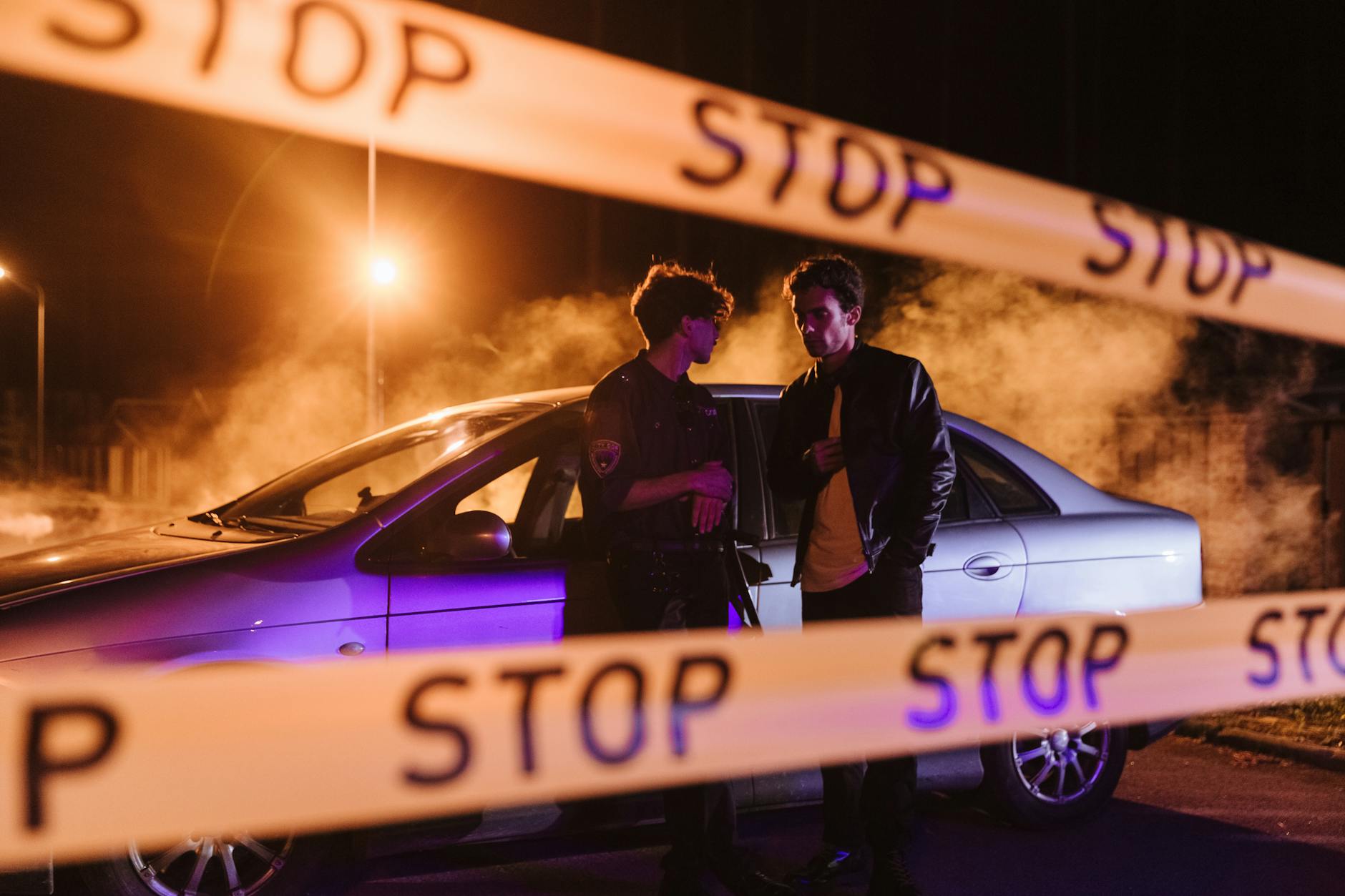
    men standing beside white car
    Photo by cottonbro studio on Pexels.com

    When Mental Health Becomes a Blanket Explanation

    Often, when a crime involves claims about demons, curses, or exorcism, we default to broad explanations about mental illness. While psychological factors certainly play a role in violent behavior, this approach can be just as problematic as jumping to supernatural conclusions. It oversimplifies complex human motivations and can stigmatize those who struggle with mental health conditions without engaging in violence.

    The reality is that people who commit violent crimes often understand exactly what they’re doing, even when their reasoning appears irrational to others. Claims about spiritual influences or supernatural compulsions may be genuine beliefs, calculated manipulation, or attempts to avoid responsibility—but they’re still human choices made by human minds.

    The Weight of Historical Fear

    pexels-photo-17092538.jpeg

    Our quick association of unusual crimes with satanic or cult activity carries troubling historical baggage. Throughout history, fears about ritual murder and human sacrifice have been weaponized against marginalized communities and non-Christian religious practices. From medieval blood libel accusations to the Satanic Panic of the 1980s, these fears have repeatedly led to persecution of innocent people whose only crime was practicing unfamiliar spiritual traditions.

    When we casually throw around terms like “ritual murder” or “satanic cult,” we’re drawing from this legacy of fear and prejudice. Ancient traditional religious practices—whether African diaspora religions, indigenous spiritual traditions, or other non-Christian faiths—suffer mass persecution and harm for violence they have nothing to do with.

    Performance and Intimidation

    Some violent acts incorporate ritualistic elements as theater rather than genuine spiritual practice. Perpetrators may stage crime scenes to create maximum psychological impact, using symbols and imagery specifically because they know these elements will generate fear and media attention. Criminal organizations sometimes employ ritualistic violence as intimidation tactics, knowing that communities will be more frightened by acts that appear supernatural or cult-related than by conventional violence.

    There’s also the sobering reality of body part trafficking, where attackers are motivated not by occult ritual, but by profit from a market driven by others’ magical beliefs. These traffickers exploit the superstitions and harmful practices of buyers who believe certain body parts possess supernatural properties. The violence appears ritualistic, but the perpetrators are criminals capitalizing on others’ beliefs rather than occultists themselves.

    Understanding these performative aspects is crucial. When we react with the exact fear and sensationalism that perpetrators may be trying to create, we’re potentially serving their goals rather than seeking truth and justice.

    Our Collective Responsibility

    You have the responsibility to approach these situations with critical thinking rather than reflexive fear. This means:

    Questioning initial narratives. When media reports focus heavily on ritualistic elements, ask what evidence actually supports claims about organized religious activity versus individual psychological factors.

    Recognizing our biases. Examine why certain religious or spiritual practices trigger immediate suspicion while others don’t. Are we applying different standards based on familiarity and cultural prejudice?

    Demanding nuanced coverage. Support journalism that explores the complex human factors behind violent crime rather than sensationalizing supernatural angles.

    Protecting vulnerable communities. Remember that panic about ritual crime has historically harmed innocent people who practice minority religions or alternative spiritual traditions.

    Moving Forward with Clarity

    Authentic spiritual and religious beliefs do motivate violence in certain cases, but not necessarily  in the sensationalized way that evokes community fear. Often it goes under the radar rather than drawing attention. But the determination of what actually motivated a particular crime should be based on evidence, investigation, and understanding of the specific individual involved—not on our collective fears or media speculation.

    When we encounter stories of unusual violent crimes, we serve humanity better by asking just questions: What drove this person to violence? What psychological, social, or personal factors were involved? How can we better understand and prevent such acts in the future?

    The darkness in these stories isn’t supernatural—it’s human. And that’s exactly why we need to approach it with human wisdom, compassion, and critical thinking rather than ancient fears and modern panic.

    By taking responsibility for our own responses to these tragic events, we can work toward a more just and rational understanding of human violence, one that protects both victims and innocent communities from the secondary harm that comes from moral panic and misplaced blame.